
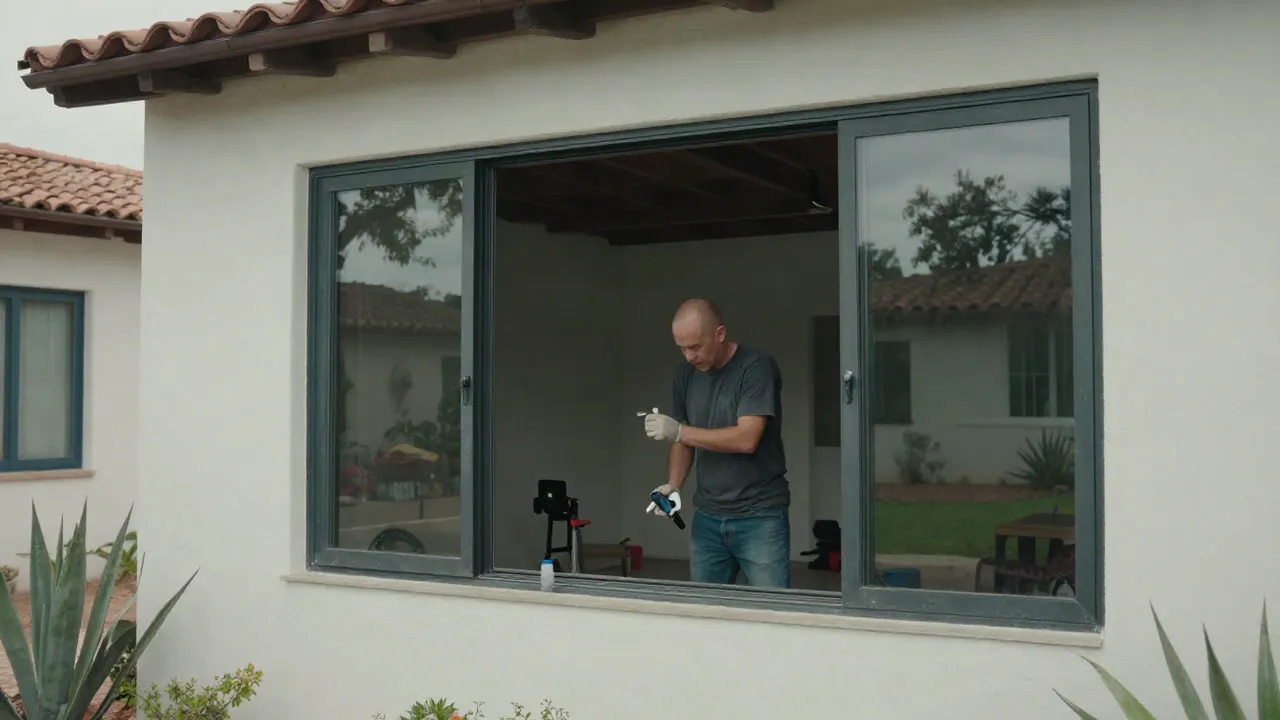
Choosing between sliding windows and other window types in Los Angeles comes down to three decisions: what the opening can physically accept, what glass package handles your sun exposure, and what the room is actually used for. Sliding windows are the right call when you have a wide, short opening, a walk-out to a patio, or a room where a swinging sash would block furniture - and the wrong call on a narrow bedroom wall where a casement catches more breeze. How to choose sliding windows Los Angeles CA homeowners ask us about every week is really a sequence of trade-offs, and this guide walks through each one in the order we handle them on a real job.
How Do You Choose Sliding Windows for a Los Angeles Home?
You choose sliding windows for a Los Angeles home by measuring the rough opening first, then matching frame material and glass to the room's orientation and noise exposure. Start with the opening. A slider needs a wide, relatively short aperture - typically 36 to 72 inches wide and 24 to 48 inches tall per panel - because the sash travels horizontally on a track. If your opening is taller than it is wide, a slider wastes glass and a casement or single-hung will serve you better.
Next, look at what is outside the window. A slider that opens onto a balcony, side yard, or pool deck earns its keep because you get a full-height clear opening with no sash swinging into the walkway. A slider on a bedroom wall facing a neighbor's stucco wall earns you nothing but a track that collects grit.
Then check the interior. Sliders do not project into the room, which matters in tight floor plans - a 1930s Spanish bungalow in Echo Park or a narrow Sherman Oaks ranch where a casement would smack a dresser. We measure the swing clearance on every quote because it changes the recommendation more often than glass specs do.
Finally, decide who is opening the window. Sliders glide on a track with one hand and no cranking, which is why we install a lot of them for older homeowners and in kitchens where your hands are full. If you want the full picture of how we approach the whole house, our Energy Efficient Window Replacement Los Angeles CA page covers the room-by-room process.
Sliding Windows vs Other Window Types in Los Angeles
Sliding windows beat casement, double-hung, and awning windows on horizontal openings, walk-out access, and interior clearance, and they lose on airtightness and maximum ventilation. Here is how the comparison shakes out in our climate.
- Sliding vs casement: A casement seals tighter because the sash cranks against the frame, so it wins on air infiltration and catches more breeze on a narrow wall. A slider wins on width and on not blocking a walkway.
- Sliding vs double-hung: Double-hung gives you top-and-bottom ventilation and suits historic facades. Sliders give you a wider clear opening and fewer moving parts to service.
- Sliding vs awning: Awnings are excellent over kitchen counters and stay open in light rain. Sliders are better for full-height glass and patio access.
- Sliding vs fixed picture: A picture window is the most energy-efficient glass you can buy because nothing opens. Many of our projects pair a fixed center panel with two operating sliders on either side.
In Los Angeles the deciding factor is usually sun direction, not style. West- and south-facing glass takes the brunt of afternoon heat from May through October, and that is where glass choice matters more than whether the sash slides or cranks. If you are weighing a slider against a crank-out unit on a west wall, our Energy Efficient Casement Window Installation Los Angeles CA page explains where the casement actually pays off.
Are Sliding Windows Energy Efficient in Los Angeles CA?
Sliding windows are energy efficient in Los Angeles CA when they carry a low U-factor and a low solar heat gain coefficient, because the climate problem here is heat gain, not winter heat loss. A standard clear-glass slider is a mediocre performer. A slider built with Low-E glass, argon fill, and a thermally broken frame performs close to a casement.
The weak point on any slider is the meeting rail and the track, where two sashes overlap. Air and heat sneak through that seam if the weatherstripping is thin or the frame racks. We specify sliders with a double-bulb weatherstrip and an interlock at the meeting rail, and we check the track for level before the unit goes in - a slider installed out of level will leak air no matter what glass is inside it.
For Los Angeles, target a U-factor of 0.32 or lower and a solar heat gain coefficient between 0.23 and 0.30 on west- and south-facing glass. That range cuts afternoon heat without turning the room into a cave. On north-facing walls you can go lighter on the tint and keep more daylight. Our Energy Efficient Sliding Window Replacement Los Angeles CA page lists the exact glass packages we stock for this climate.
One more local factor: Title 24. California's energy code sets prescriptive requirements for replacement windows, and a permit-ready submittal needs the unit's NFRC ratings on paper. We pull the ratings for every unit we install so the inspection does not stall.
Frame and Glass Choices That Matter Here
Frame material and glass package are the two choices that decide how a slider performs, how long it lasts, and what it costs. Vinyl is the workhorse for most Los Angeles homes - it does not rot, it does not need painting, and it handles the inland heat fine. Fiberglass costs more and holds its shape better on very wide openings and in coastal salt air. Aluminum is strong and slim but conducts heat unless it has a thermal break, so we only use it where the design calls for it.
On the glass side, three upgrades do most of the work:
- Double-pane with argon: the baseline for any replacement slider. Two panes, a sealed gap, and gas fill cut heat transfer sharply over single glass.
- Low-E coating: a microscopically thin metallic layer that reflects infrared heat. This is the single biggest upgrade for a west-facing slider in the Valley.
- Laminated glass: two panes bonded with a plastic interlayer. It does not cut heat much, but it deadens street noise and holds together on impact, which is why we recommend it on sliders facing busy boulevards.
If you are comparing a two-pane slider against a three-pane unit on a noisy or very exposed wall, our Triple Pane Window Replacement Los Angeles CA page breaks down when the extra pane is worth the weight and cost. For most Los Angeles sliders, double-pane with Low-E is the sweet spot.
What Sliding Windows Cost in Los Angeles in 2026
Typical 2026 pricing in Los Angeles runs $650 to $1,400 per sliding window installed for a standard vinyl double-pane unit, and $1,200 to $2,400 for a large patio slider or a fiberglass unit with upgraded glass. The spread comes from size, frame material, glass package, and what the install itself requires.
Here is how the numbers break down on the jobs we quote:
- Small slider, vinyl, double-pane: $650-$950 installed.
- Standard slider, vinyl, Low-E double-pane: $850-$1,200 installed.
- Large patio slider, vinyl or fiberglass: $1,400-$2,400 installed.
- Laminated or triple-pane upgrade: add $200-$500 per unit.
- Stucco repair and trim after removal: $150-$400 per opening on older homes.
Two local cost drivers catch homeowners off guard. First, older Los Angeles homes - 1920s through 1950s stock in Pasadena, Highland Park, and Santa Monica - often have stucco and lath that crumbles when the old frame comes out, so the repair line is real. Second, second-story and hillside sliders need scaffolding or a lift, which adds $300 to $800 to the job. We quote the repair and access line upfront so the final invoice matches the estimate.
Common Mistakes We See on Sliding Window Projects
The most common sliding window mistake in Los Angeles is buying on glass specs alone and ignoring the track and the install. A premium slider set out of level will whistle air within a year. Here is what we watch for, and what you should too.
- Skipping the level check. The track has to be dead level and the frame square. We check both before the unit is fastened, not after.
- Ignoring the weep system. Sliders drain water through weep holes at the sill. If those get caulked over during stucco repair, water backs up into the wall.
- Choosing tint that is too dark. A very low solar heat gain coefficient on a north-facing slider makes the room gloomy. Match the glass to the orientation.
- Reusing old flashing. New units need new flashing and a proper sill pan. Reusing the old flashing is how a replacement window starts leaking in year two.
- Forgetting the permit. Replacement windows in Los Angeles require a permit, and the inspector will want the NFRC labels. We handle the submittal.
We see these most often on owner-installed jobs and on projects where the lowest bid skipped the flashing. A slider is a simple mechanism, but the water management around it is not.
When to Call a Professional
Call a professional when the opening is out of square, when the existing frame is embedded in stucco, or when the window is above the first floor. Those three conditions turn a weekend project into a multi-day job with real water-damage risk if it goes wrong.
We also get called when a slider is already installed and failing - a sash that jumps the track, a meeting rail that lets in a draft, condensation between the panes. Sometimes it is a weatherstrip and roller replacement; sometimes the frame has racked and the unit needs to come out. We diagnose it on site and tell you which one it is before any work starts.
American Reliable Windows & Doors handles sliding window replacement across the San Fernando Valley, the Westside, and the foothill communities. We measure, pull the permit, and install with new flashing and a level track every time. If you are in an older neighborhood where the stucco is original, our Energy Efficient Window Replacement in Pasadena page covers how we handle those openings specifically.
Frequently Asked Questions
How do I choose sliding windows for my Los Angeles home?
Measure the rough opening first - sliders need a wide, short aperture, roughly 36 to 72 inches wide per panel. Then match frame material to exposure (vinyl for most homes, fiberglass for coastal or very wide openings) and choose Low-E double-pane glass for west- and south-facing walls. Confirm the unit carries NFRC ratings for the Title 24 permit.
Are sliding windows energy efficient in Los Angeles CA?
Yes, when specified correctly. A vinyl slider with Low-E double-pane glass, argon fill, and a double-bulb weatherstrip at the meeting rail hits a U-factor of 0.32 or lower and a solar heat gain coefficient of 0.23 to 0.30, which is what you want on west- and south-facing glass in this climate. Clear-glass sliders perform far worse.
How much do sliding windows cost in Los Angeles California?
Expect $650 to $1,400 per standard sliding window installed in 2026, and $1,400 to $2,400 for a large patio slider or a fiberglass unit with upgraded glass. Stucco repair on older homes adds $150 to $400 per opening, and second-story access adds $300 to $800.
What are the pros and cons of sliding windows in Los Angeles?
Pros: wide clear opening, no sash swinging into the room, easy one-hand operation, and good patio access. Cons: the meeting rail is a weaker seal than a casement, the track collects grit and needs cleaning twice a year, and a poorly leveled install leaks air. For most Los Angeles rooms the pros outweigh the cons.
Are sliding windows good for Los Angeles homes?
They are a strong fit for wide walls, kitchen pass-throughs, patio doors, and rooms where furniture sits close to the glass. They are a weaker fit on narrow bedroom walls where a casement catches more breeze, and on very tall openings where a slider wastes glass. Match the type to the opening and they perform well here.
Get Help with Energy Efficient Window Replacement in Los Angeles
If you are still deciding between a slider and another type, we will measure the opening, check the orientation, and tell you which one actually fits your room - no pressure either way. Call American Reliable Windows & Doors at (747) 350-1790 to schedule a measurement.