
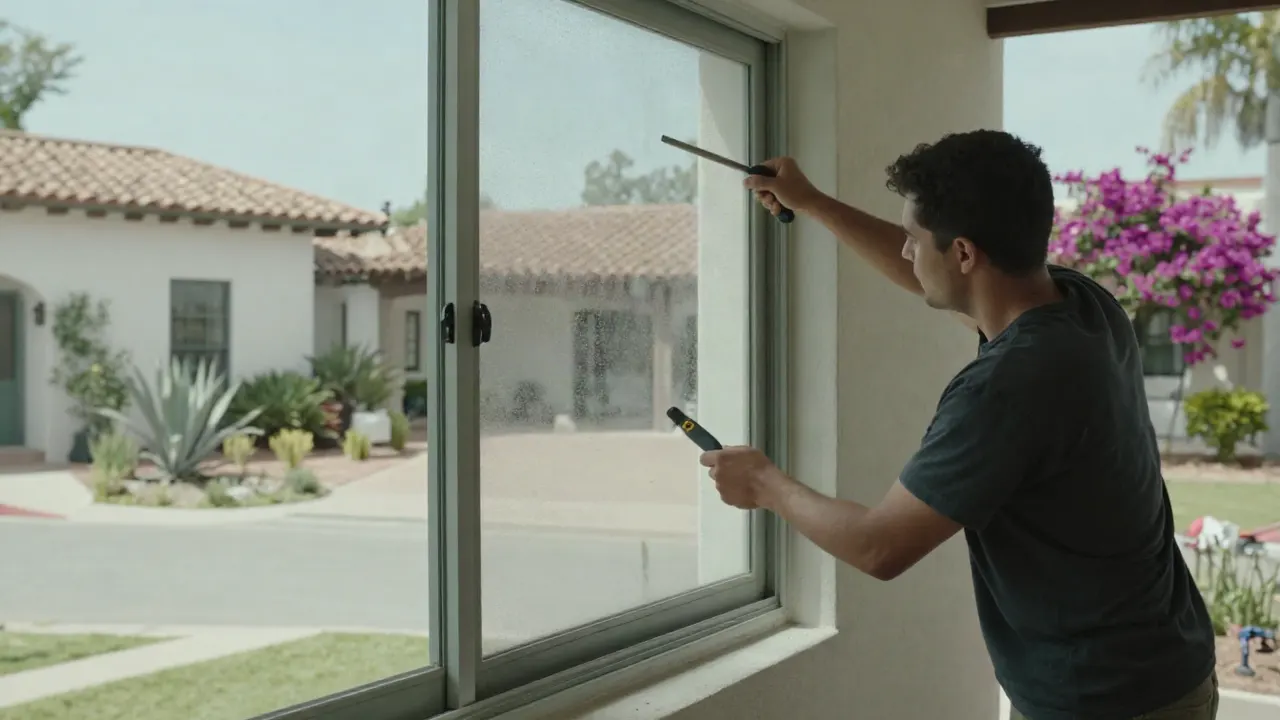
The clearest signs your windows have lost their thermal insulation are interior glass condensation that will not wipe away, drafts you can feel with your hand near the frame, and cooling bills that climb 15% to 30% without a change in how you run the AC. If two or more of those are happening at once, the glass unit or the seal has failed, and no amount of caulk will bring the insulation back. Below we walk through each sign, why it happens in Los Angeles specifically, and how to confirm it before you spend money on replacement.
What thermal insulation failure actually looks like
Signs windows need replacement thermal insulation Los Angeles CA homeowners should watch for are physical, visible, and measurable - not a vague feeling that the house is drafty. A window insulates in two ways: the sealed air or gas space between panes, and the frame and weatherstripping that stop outside air from entering. When either one breaks down, the window becomes a hole in your building envelope.
Window thermal insulation failure is a condition where the sealed glass unit or the frame seal no longer blocks heat transfer and air infiltration, and it is confirmed when you can measure a temperature difference, see fog between panes, or feel airflow at the frame. That definition matters because it separates a real failure from a cosmetic complaint.
In our work across Los Angeles, we see three failure patterns over and over: failed dual-pane seals on 1980s and 1990s tract homes, dried-out glazing and weatherstripping on original 1920s bungalows, and single-pane aluminum sliders in mid-century apartments that never insulated well to begin with. Each one shows up differently.
How do I know if my windows have poor insulation in Los Angeles CA?
You know your windows have poor insulation in Los Angeles CA when the inside glass surface reads more than about 10°F warmer or cooler than the room air on a 95°F afternoon or a 48°F winter night. An infrared thermometer pointed at the center of the glass gives you that number in five seconds.
Run this check on a hot afternoon in the San Fernando Valley, when the sun has been on the glass for a few hours. A window with intact low-E coating and a sealed gas space will read within a few degrees of the room. A failed unit will read 15°F to 25°F hotter than the room, because the reflective coating has degraded or the argon has leaked out.
Then do the hand test. On a windy evening, hold the back of your hand one inch from the frame, the sash edge, and the meeting rail where the two sashes close. You should feel nothing. A steady cool or warm stream means air is moving through a gap that weatherstripping should be blocking.
Finally, check the glass itself. Hold a flashlight against the pane at night. If you see a hazy film or a visible moisture ring between the panes, the seal is gone. That is the single most reliable sign your windows need replacing in Los Angeles, because a fogged sealed unit cannot be repaired - only the glass or the whole window gets replaced.
The most common failing window signs Los Angeles CA homeowners report
Failing window signs Los Angeles CA residents call us about fall into a short list, and most homes show three or four of them at once. Here is what to check, in the order we check it.
- Fog or condensation between the panes. The seal has failed and the desiccant is saturated. This is permanent and cannot be cleaned off.
- Drafts at the frame or meeting rail. Weatherstripping has compressed or the sash no longer sits square in the frame.
- Condensation on the room-side glass every morning. The glass is too cold, which means it is conducting heat instead of resisting it.
- Cooling bills up 15% to 30% year over year. Compare the same summer month on your LADWP bill, not the whole year.
- Glass that is hot to the touch on a sunny afternoon. Low-E coating has degraded or was never there.
- Visible warping, rot, or separation at the frame. Common on wood frames in older Pasadena and Santa Monica homes.
- Outside noise that has gotten noticeably louder. A failed seal also loses its acoustic value.
One of these alone is worth a look. Three or more together means the window is done as an insulator, and patching it will not change your energy use.
Why are my windows drafty in Los Angeles California?
Windows get drafty in Los Angeles California for two reasons: air leaks past the weatherstripping and frame, and the glass itself has stopped resisting heat transfer. The first is a sealing problem. The second is a glass problem. Most drafty windows here have both.
Our climate is harder on window seals than people expect. Summer surface temperatures on west-facing glass in the Valley regularly hit 140°F to 160°F, then drop 40°F overnight. That daily expansion and contraction cycle cooks the butyl seal around the glass unit and hardens the weatherstripping years faster than in a mild climate. Add the Santa Ana winds each fall, which push grit and dust into every gap, and a window that would last 25 years in Portland can fail in 12 to 15 here.
Older homes have a second issue. Original single-pane wood windows in neighborhoods like Pasadena energy efficient window replacement territory were built before air conditioning was standard, so they were never designed to hold cooled air in. The glazing putty dries, the sash weights wear, and the frame racks out of square. You feel the draft because there is a real gap, not because the glass is thin.
Aluminum-frame sliders from the 1960s and 1970s are the worst offenders. Aluminum conducts heat about 1,000 times faster than vinyl, and the frames have no thermal break. Even with intact glass, the frame itself radiates heat into the room all afternoon.
What causes window condensation in Los Angeles CA?
Window condensation in Los Angeles CA is caused by warm, moist indoor air hitting a glass surface that has dropped below the dew point - usually because the glass is conducting outside heat or cold straight through. The condensation is the symptom. The cold glass is the problem.
There is a normal version and an abnormal version. A thin film of moisture on the outside of a window in the early morning is normal and actually means your low-E coating is working. Moisture on the inside of the glass, especially when it beads, runs, or leaves water on the sill, means the interior surface is too cold to hold the humidity in your home.
Los Angeles indoor humidity typically sits at 40% to 55%, which is comfortable but enough to condense on a glass surface below roughly 50°F. A well-insulated dual-pane unit keeps its interior surface within a few degrees of room temperature, so it never gets that cold. A failed unit, a single-pane window, or an aluminum frame will.
Condensation between the panes is a different animal. That is a failed seal, full stop. The desiccant bead inside the spacer has absorbed all the moisture it can, and the gas fill has escaped. You cannot dry it out, and you cannot reseal it in place. The unit has to be replaced.
What to watch out for before you replace anything
The biggest mistake we see is homeowners replacing every window in the house when four or five units are actually failing. A 20-year-old dual-pane window on the shaded north side of a house may still have a decade of life left, while the west-facing units in the same room are shot.
Watch for these traps:
- Assuming caulk will fix it. Caulk seals the frame to the wall. It does nothing for a failed glass seal or worn weatherstripping, and it will not change a temperature reading on the glass.
- Buying on U-factor alone. In Los Angeles, solar heat gain coefficient (SHGC) matters more than U-factor on west and south glass. A window with a great U-factor and a high SHGC will still cook the room.
- Ignoring the frame material. Vinyl and fiberglass frames insulate far better than aluminum. If you replace the glass but keep an unbroken aluminum frame, you have solved half the problem.
- Skipping the permit question. Window replacement in the City of Los Angeles generally requires a permit, and the rules differ by jurisdiction across the county.
- Replacing windows before checking attic insulation and duct sealing. A leaky duct in the attic can cost you more cooling energy than old windows ever will.
We see the opposite mistake too - homeowners who spend two summers adding weatherstripping and plastic film to windows that have visibly fogged glass. Once the seal is gone, no retrofit product restores the insulation.
When to call a professional
Call a professional when you have fogged glass between the panes, a temperature reading on the glass more than 10°F off room temperature, or three or more failing units in the same room. Those are not maintenance items. They are replacement decisions.
Our team at American Reliable Windows & Doors measures the glass temperature, checks the seals, and tells you which units are actually failing and which ones have years left. We would rather replace four windows than sell you twelve you do not need. For homes with a mix of window types, we can also walk you through Double Pane Window Replacement Los Angeles CA for the failing units and leave the sound ones alone.
If your whole house is original single-pane glass, the math changes. Whole-home Energy Efficient Window Replacement in Los Angeles, California usually pays back faster than piecemeal work, because the envelope is fixed in one pass and the cooling load drops across every room.
Frequently Asked Questions
What are the signs my windows need replacing in Los Angeles?
Fog between the panes, drafts at the frame, interior condensation every morning, glass that reads more than 10°F off room temperature, and cooling bills up 15% to 30% are the main signs. Three or more together means the window has failed as an insulator.
How do I know if my windows have poor insulation in Los Angeles CA?
Point an infrared thermometer at the center of the glass on a hot afternoon. If it reads 15°F to 25°F hotter than the room, the insulation has failed. A hand test for airflow at the frame confirms it.
Why are my windows drafty in Los Angeles California?
Drafts come from worn weatherstripping, frames that have racked out of square, and aluminum frames with no thermal break. Los Angeles heat cycling and Santa Ana winds wear seals out faster than in milder climates.
When should I replace my windows in Los Angeles?
Replace a window when the sealed unit has fogged, when the glass temperature is more than 10°F off room temperature, or when the frame is warped or rotted. Dual-pane units here typically last 12 to 20 years before the seal fails.
What causes window condensation in Los Angeles CA?
Interior condensation happens when indoor air at 40% to 55% humidity hits glass below roughly 50°F. That cold glass means the window is conducting heat instead of resisting it. Condensation between the panes means the seal has failed.
Get help with Energy Efficient Window Replacement in Los Angeles
If your windows are showing two or more of the signs above, we can measure them and tell you exactly which units have failed and which are still doing their job. Call American Reliable Windows & Doors at (747) 350-1790 to schedule a window insulation assessment.